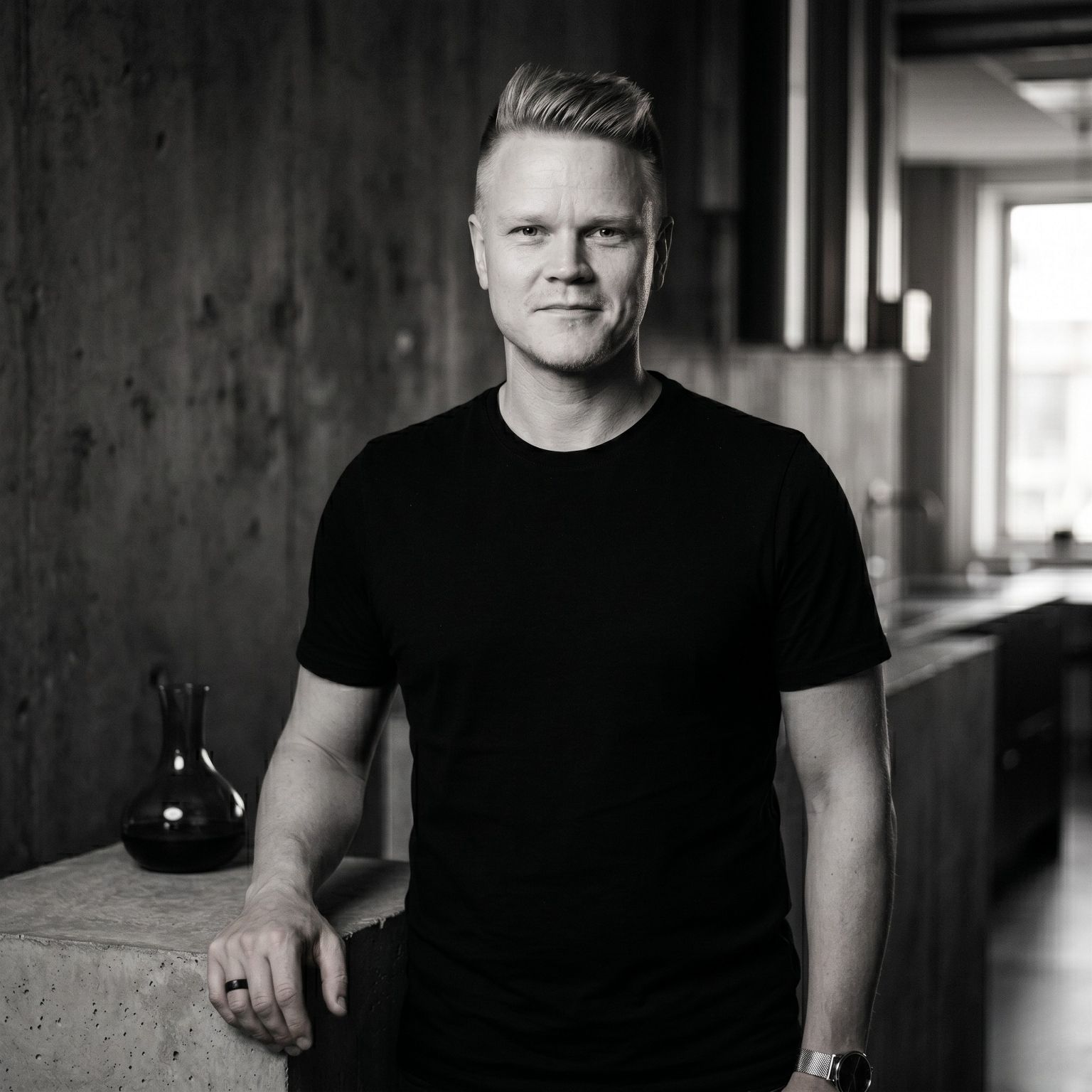
I build and run sales operations that beat the hell out of the market.
Same team, twice the output. I build two things: a way of working your sales team actually follows, and AI agents running inside the systems you already have. Both stay when I go.
What you get
Four business outcomes: more meetings, more deals won, a forecast that holds, and reps who spend their time selling. Open any one to see what changes and what it has produced.
More meetings, predictably, from real buying signals Lead generation and SDR
Not enough meetings hit the calendar, and the ones that do are often the wrong accounts.
Buying signals replace demographic lists: role changes, hiring, investment moves. Agents enrich the account, draft the opener and drop it on the SDR's list.
Reps stop building lists and researching accounts by hand.
From signal to booked conversation in five days, at a 35 % hit rate.
More deals won, and won faster Opportunity to won deal
The pipeline looks full, but deals stall and decisions drag.
Qualification gets a structure, every stage an exit criterion, and the next step is agreed in the room. Agents flag the deals going quiet before the quarter does.
Nobody re-reads old notes to work out where a deal actually stands.
Win rate 29 % → 39 %, and a shorter cycle because weak deals leave early.
A forecast that holds, quarter after quarter Sales management
The forecast doesn't hold, and the weekly meeting reports last week instead of moving next week.
One forward-looking routine: pipeline reviewed, next steps agreed, blockers cleared. What won and lost deals teach goes back into each rep's coaching.
Reporting stops being a preparation exercise. The numbers are already there.
Fewer surprises at close, and reps who improve from real deals.
Reps who sell instead of doing admin Sales and marketing automation
The CRM is too messy for any agent to trust, and the admin lands on the people who should be selling.
Follow-up, meeting notes, CRM entries and handovers run by agents, wired into the process instead of living in one-off prompts.
Meeting notes, CRM entries and follow-ups stop being anyone's evening job. That is the other half of the doubling.
Structured data from day one, so every agent downstream gets better inputs.
The difference
Hiring a full-time sales leader takes a year, and the last search may not have worked out. I do the same job part-time, starting now. I run the sales meetings, keep the numbers honest, and write the commercial section of your board deck.
Adoption is where these projects usually die. I sit in your weekly sales meetings and coach the team until the new way is how they work, not a document someone read once. I carry that, not just the build.
Most fractional CROs bring themselves, so when they leave you are back where you started. I also build the engine: prospecting signals, agents, and a CRM your team will actually use. It runs on your own tools and your own accounts, and it keeps running after I'm gone.
Ten of these agents already run inside real sales organisations. I'll walk you through them live and show you what they produce, before you commit to anything. I write the code myself, so nothing gets handed to a subcontractor.
Building a working GTM operation – from target state through leadership and technology into results – is a big job. But one capable partner is enough: Rami.
How it's done
Your growth engine will be running in a few weeks, then compounding week by week. Yours to keep.
This is as much change management as technology. The default is the tools you already run, and new ones go in only where something is missing.
A systematic operating model
The weekly rhythm, the stages, the metrics, and who owns what. This is the part that holds when people change.
Sales craft
Discovery, qualification, disqualification, business cases and power maps. Coached in your own live deals, not in a training room.
Sales systems
A CRM your team actually uses, structured data from day one, and a signal engine on top of the tools you already run.
AI automations
Agents doing prospecting, meeting prep, follow-up and CRM entries. In production, on your own accounts.
Two of these are people and two are machines. Neither half works without the other, and more automation raises what the people side has to be able to do, not lowers it. See the ten agents running →
- Strategic direction: ICP, offering and targets turned into metrics
- A signal engine on top of the tools you already have
- A CRM your team actually uses, with structured data from day one
- Agents running prospecting, follow-up and CRM entries
- A playbook and weekly routines that aim the freed-up hours at high-value work, not at whatever is most visible
- Everything on your own accounts
- Documented as it is built
- No lock-in, with me or without me
- One 45-minute conversation with leadership: goals, the tools you run today, and the number that has to move. That sets the scope.
- A one-page proposal: deliverables, timeline and the metrics we measure against.
- Kickoff, and the build starts the same week. No separate project organisation.
- One two-hour workshop a week
- Leadership in the kickoff
- Your existing weekly sales meeting
Starting from €5,000/mo. Let's discuss your scope.
Or see ten use cases from the engine first →Results
Listed Finnish IT service companies posted a −3 % median organic decline in 2025. Sevendos grew 14 %. A 17-point gap.
I built the Sevendos commercial engine and ran it at the same time: operating rhythms, pipeline structure, CRM hygiene, outbound process, metrics that actually mean something. The growth didn't come from the market, because the market was negative — organic revenue across Finland's listed IT service companies fell by a median of 3 % that year. Numbers a board and a buyer's due diligence can stand on. The question worth sitting down with: what would that same gap look like in your market?
Comparison figure: Inderes, IT service sector coverage — median organic revenue growth 2025 across Digia, Digital Workforce, Gofore, Netum, Siili, Solteq, Vincit and Witted.
Who I've worked for
Let's talk
By when do you want to see results?
To ensure quality, I take on a limited number of engagements at a time. Book 45 minutes, tell me what's broken in sales, no commitment either way. I'm on your side of the table. I'll tell you plainly if this is my job, or if I should recommend someone else.